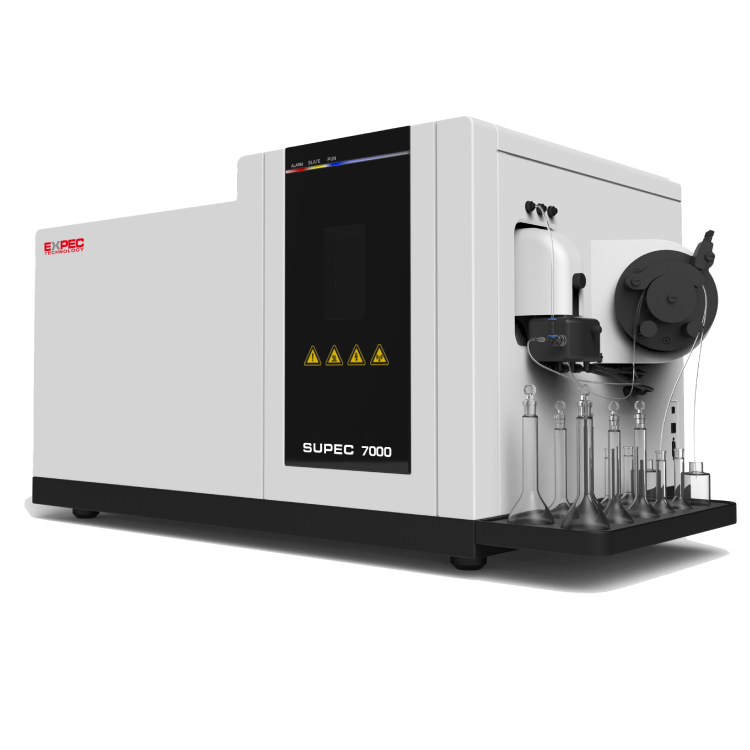
Analyseur de nutriments et de désinfectants
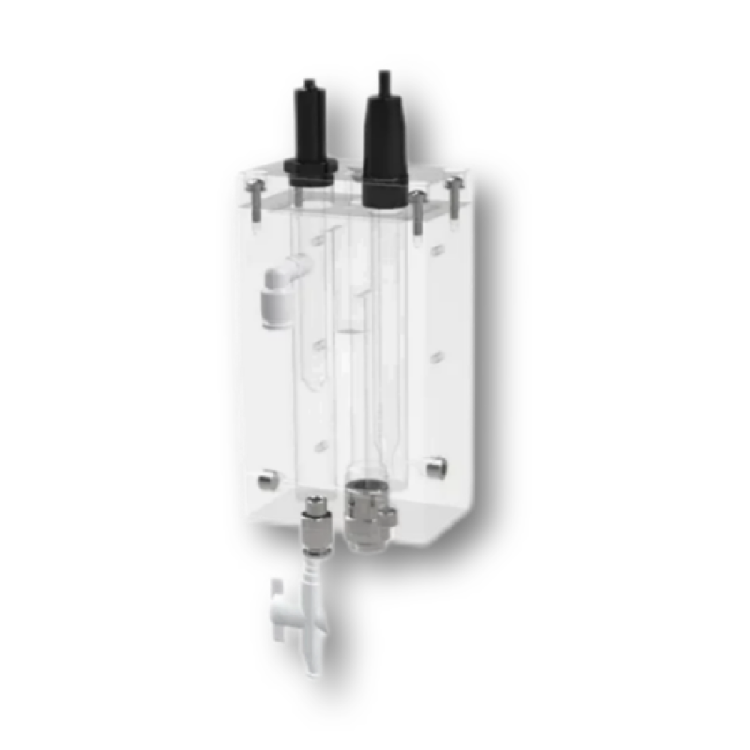
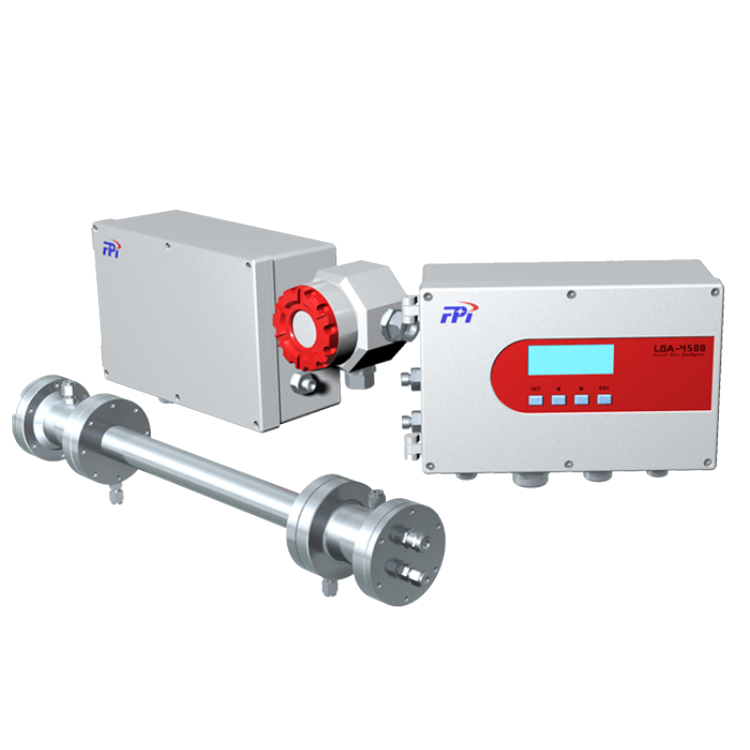
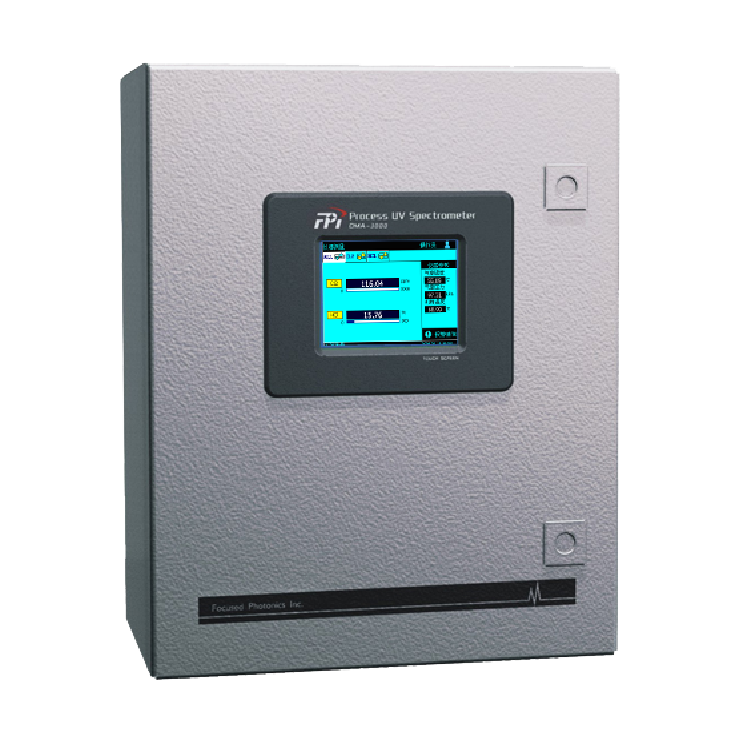
Focused Photonics Inc. (FPI) advances aquatic health with its Nutrient and Disinfectant Analyzers, delivering precise, real-time detection of chlorophyll-a, blue-green algae, COD, ions, residual chlorine, and turbidity in lakes, rivers, and treatment plants. The SIA and sensor series employ fluorescence, UV absorbance, ISE, and chemical methods for compliance with ISO 7027, GB 3838-2002, and EPA Method 415.3.
Aquatic Audit: Principles of Nutrient and Disinfectant Detection
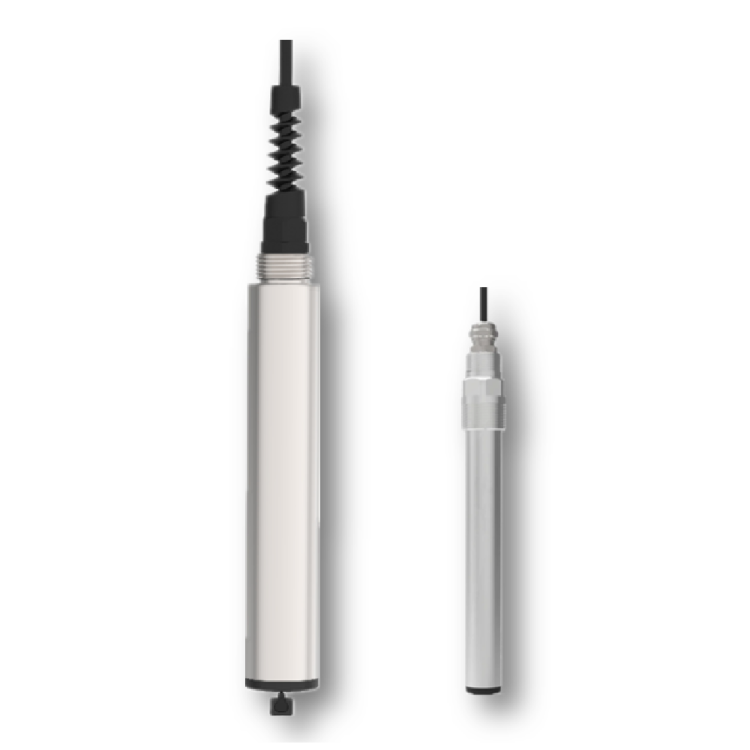
Hydrological sensors measure water dynamics using microwave radar, Doppler shift, and hydrostatic pressure for non-invasive level, flow, and velocity profiling. FPI’s sensors employ 26 GHz radar for level (0-30m, ±1 mm accuracy) and flow (0-20 m³/s, ±1%), Doppler for velocity (0-10 m/s, ±0.01 m/s), and hydrostatic transmitters for submerged depth (0-100m, ±0.1%), per ISO 1438.
Lire PlusMoins
Evolved from 1980s ultrasonic probes, these sensors integrate AI for wave compensation and low-power operation (-20°C to 60°C). FPI refines with anti-fouling coatings and 4-20 mA outputs, ensuring <0.5% drift per USGS guidelines. In 2025’s flood-resilient era, our networks fuse radar data with IoT for predictive modeling, informing SDG 6 water security.
FPI Nutrient and Disinfectant Analyzers in Ecosystem Protection
FPI's analyzers monitor 4,000+ water bodies, with 900+ units deployed annually, combating blooms and ensuring disinfection.
Chlorophyll-a sensors detect blooms in Lake Erie, reducing cyanotoxin risks by 25% via early alerts, per EPA LG 403.
COD sensors optimize TP/ammonia in WWTPs, saving 18% chemicals for GB 18918-2002 Class 1A.
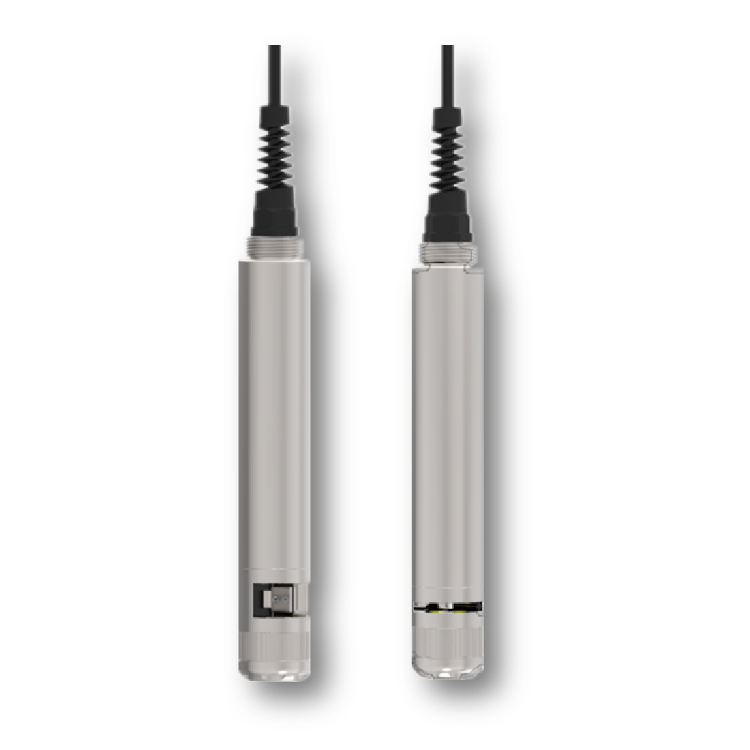
Residual chlorine electrodes verify free chlorine in taps, cutting violations by 35% per WHO guidelines.
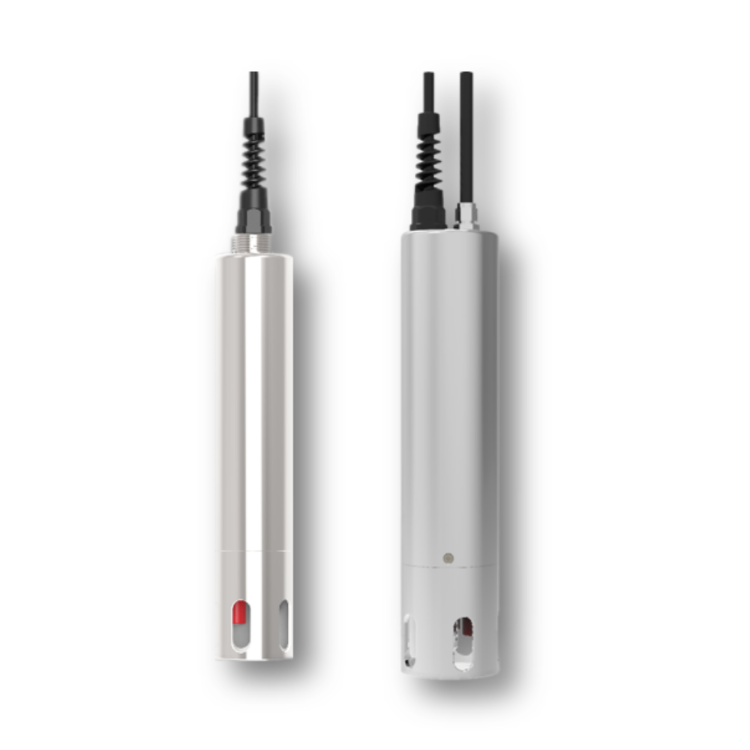
Ion-selective sensors track nitrates in farmlands, preventing 20% groundwater contamination.
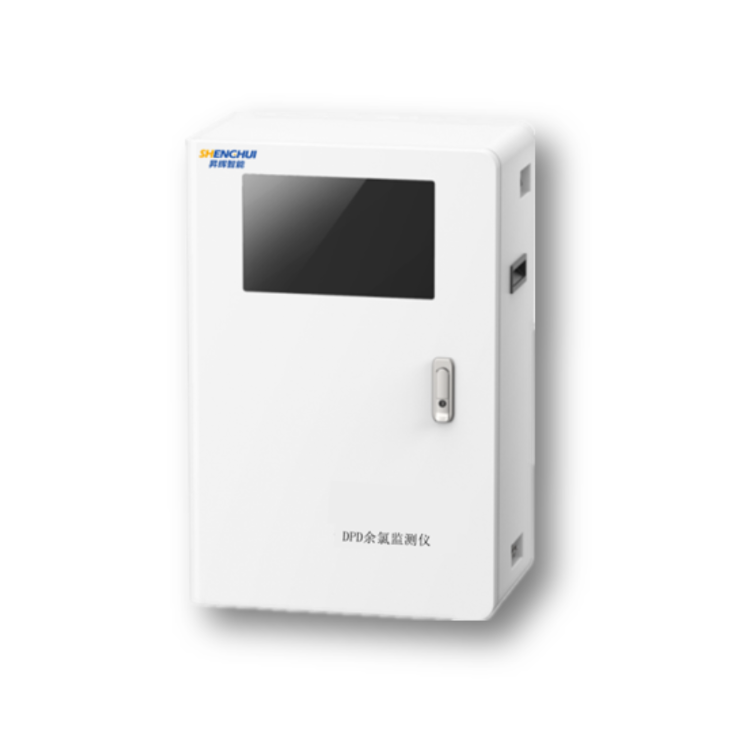
These applications, via FPI’s IoT dashboards, support 5+ national water directives, advancing SDG 6.
FPI's Aquatic Vigilance: Sustaining Purity in Nutrients
With 22 years of sensor innovation, 888+ patents, and ISO 17025 certifications, FPI's analyzers prioritize sensitivity and durability, offering 20% higher resolution than legacy tools.
Flow Foundations: Unpacking FPI's Nutrient Detection
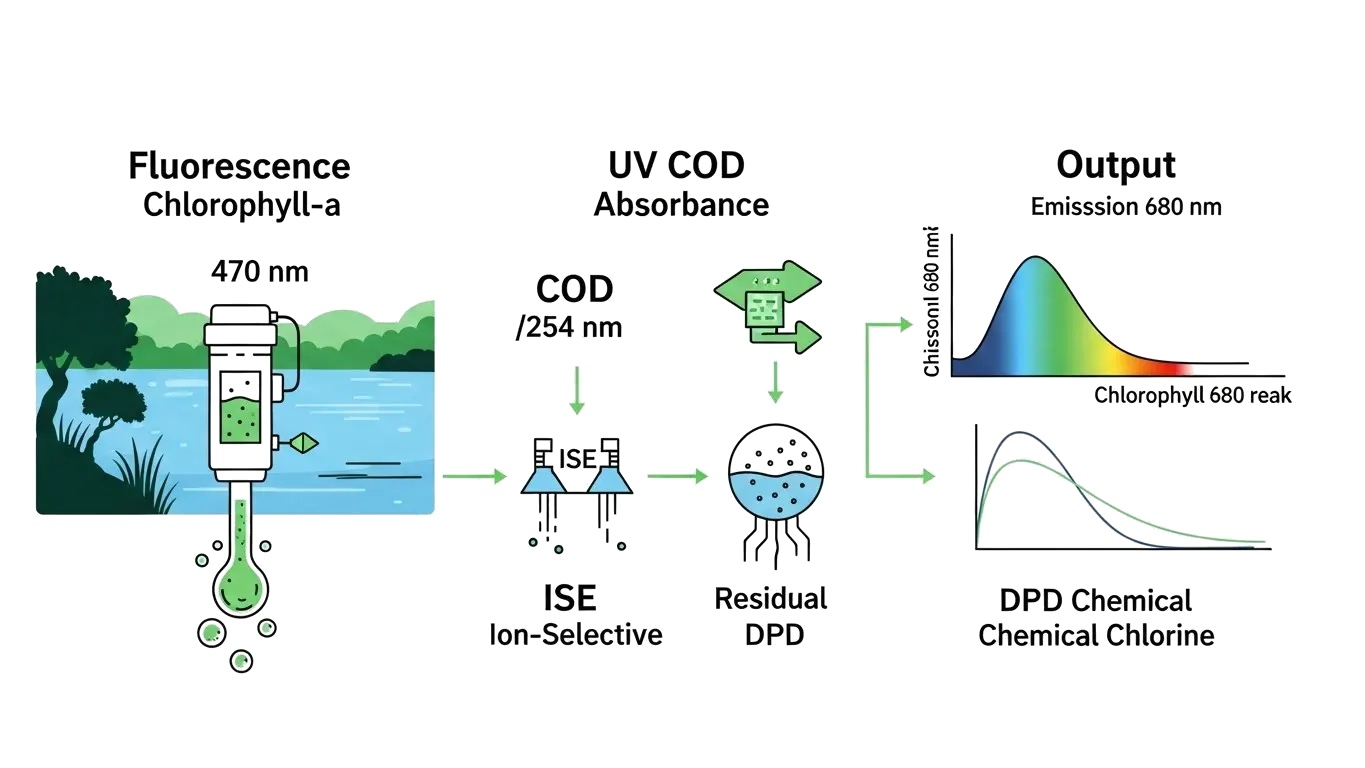
FPI’s analyzers trace biological/chemical signals through layered precision:
- Exemple d'admission: Filters remove particulates, stabilizing for fluorescence/UV.
- Spectral Sensing: Excitation/absorbance/ISE probe parameters, with DPD reaction for chlorine.
- Signal Processing: AI inverts spectra, outputting via MQTT for SCADA.
- Alert Generation: Dashboards flag thresholds, linking to GIS for mapping.
This nutrient pathway, shown in our sensor schematics, ensures vigilant purity.
Nutrient and Disinfectant Techniques Table: FPI’s Detection Diversity
| Technique | Paramètres | Sensibilité | Adaptation au déploiement | Amélioration du FPI |
|---|---|---|---|---|
| Fluorescence | Chlorophyll-a, Algae | 0.01 μg/L | Lakes | Dual-wavelength for accuracy |
| Absorbance UV | COD | 0,1 mg/L | Eaux usées | Turbidity correction |
| ISE | Ions | 0,05 mg/L | Boire | Selective membranes |
| Chemical DPD | Residual Chlorine | 0.02 mg/L | Treatment | Low-reagent reaction |
FPI’s analyzers sense 2025’s nutrient imperatives.
Ecosystem Catalysts: Broader Impacts of FPI Analyzers
FPI analyzers catalyze health: In lakes, they avert 20% bloom costs; in treatment, alerts save USD 150K fines. With open APIs and low-SWaP, our tools foster data-driven governance, refining 25% of water indices for SDG 6.
Aquatic Queries: Six Nutrient Answers
Comment les capteurs FPI détectent-ils les premières proliférations d'algues dans les lacs ?
La fluorescence à 680 nm quantifie la chlorophylle-a avec une précision prédictive de 88%, conformément à la norme ISO 10260.
Quel rôle jouent les UV dans la précision de la DCO dans les effluents turbides ?
L'absorbance à 254 nm est corrigée pour 500 NTU, ce qui permet de maintenir une erreur de <1,5% conformément à la norme EPA 415.3.
Comment l'ISE assure-t-il la sélectivité des ions dans les eaux riches en nutriments ?
Les membranes rejettent les interférents comme le K+, atteignant ±0,05 mg/L pour NH4+ selon ISO 17294.
Les analyseurs FPI peuvent-ils s'intégrer au système SCADA du lac pour les alertes ?
MQTT transmet les algues/COD aux automates, déclenchant des interventions plus rapides de 18%.
Quel est l'étalonnage conforme à la norme GB 3838-2002 pour le chlore désinfectant ?
Les modèles IP68 avec compensation de la salinité supportent une turbidité de 1 NTU dans 40 ppt, conformément à la norme ASTM D1889.
How do FPI sensors perform in coastal nutrient surges?
Les modèles IP68 avec compensation de la salinité supportent une turbidité de 1 NTU dans 40 ppt, conformément à la norme ASTM D1889.
Demander un rappel
Si vous avez des questions concernant nos services, veuillez remplir le formulaire de contact ci-dessous.