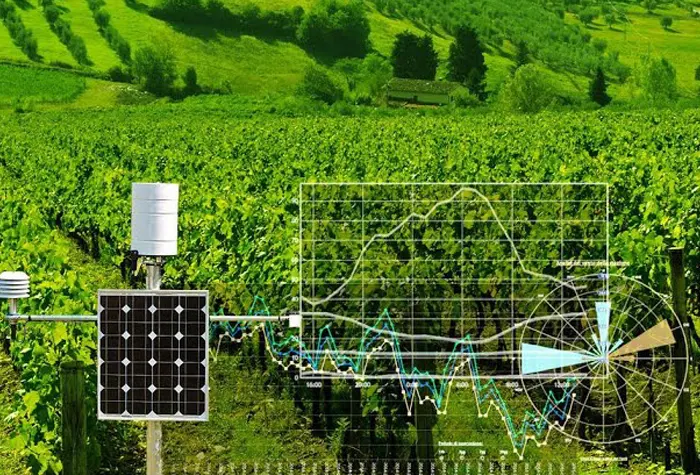
Near-infrared technology is a nondestructive, rapid and green analysis technology, and can be applied to the determination of oil and grease product as well as oil seeds quality in oil factories. The technology has brought huge economical benefits to factories.
SupNIR-2700 analyzer, based on near-infrared reflectance spectroscopy, performs well and possesses outstanding software integrated with the···
Near-infrared technology is a nondestructive, rapid and green analysis technology, and can be applied to the determination of oil and grease product as well as oil seeds quality in oil factories. The technology has brought huge economical benefits to factories.
SupNIR-2700 analyzer, based on near-infrared reflectance spectroscopy, performs well and possesses outstanding software integrated with the functions of spectra acquisition, modeling, remote control and management.
The analyzer was successfully used to determinate contents of the moisture, protein, fat and amino acids in the soybean and soybean meal. The results show that predicted values for near-infrared method are correspondingly near to reference values for national standard methods and the near-infrared analyzer can meet the requirement of quality control for oil and fat products as well as oil seeds.
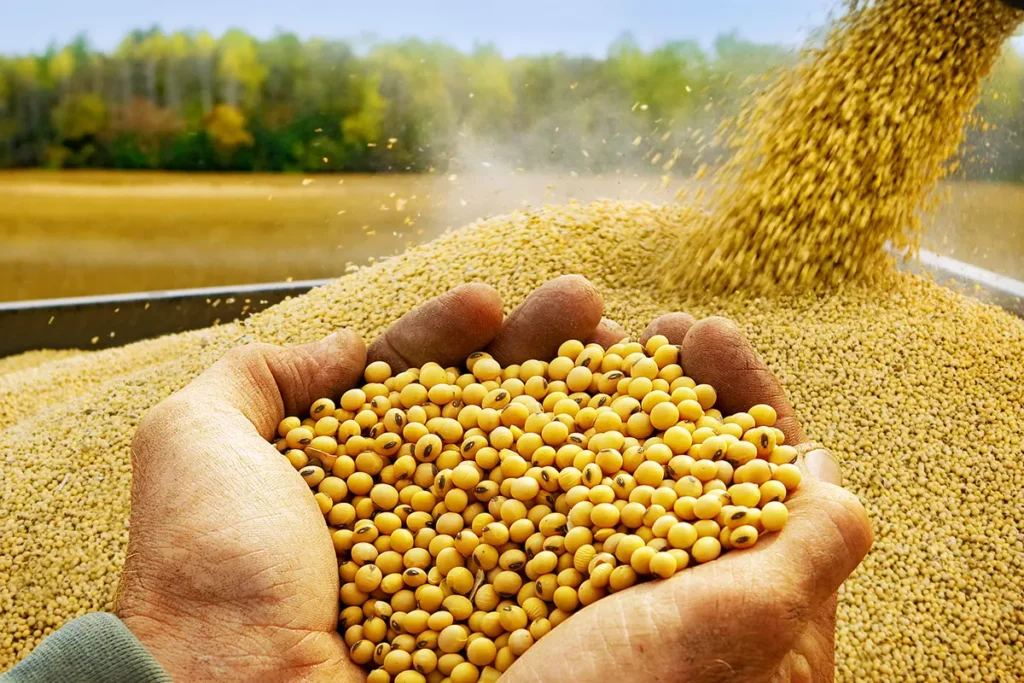
Our solutions apply near-infrared analysis for rapid quality assessment in food and pharmaceutical processing.
Near-infrared light is defined by ASTM as electromagnetic waves with wavelength in the range of 780 – 2526 nm. The near-infrared spectroscopy is mainly caused by the frequency doubling and frequency combination of the hydrogen-containing groups in the organic molecules. Different groups have their characteristic absorption peaks, and their strengths vary with the content of the sample composition, which forms the basis of qualitative and quantitative analysis of near-infrared.
Near-infrared spectroscopy has become the fastest and most compelling spectral analysis technology in recent years. Because of its fast analysis speed, no need for pretreatment and high efficiency, it has been widely used. Near-infrared spectroscopy initiated in the agricultural field. At present, large enterprises in the feed, grain and oil industries use this technology to manage all the quality control links from raw materials to products, which can bring considerable economic benefits to enterprises. In this paper, the application of near-infrared technology in soybean and soybean meal quality was studied on SupNIR-2700 near-infrared analyzer, and the amino acid analysis curve of soybean meal was established.
The 415 samples of soybeans collected for the experiment came from all over the world. All samples were cleaned and packed in plastic sealed pockets and stored in a 4℃ freeze dryer. Soybean meal was obtained by crushing soybeans and removing oil. All the samples were analyzed for moisture, crude protein, crude fat and amino acid content by the national standard analysis method, which was used as the reference value for the near-infrared analysis. The near-infrared spectrum of the sample is correlated with its corresponding characters. The model is established by partial least squares (PLS) method. The 80% sample forms a calibration set to establish a model, and the remaining 20% sample forms a testing set to test the model to determine the final result.
Table 1 shows the model results for some characters of soybean and soybean meal, such as moisture, crude protein, crude fat and amino acid content. Figure 1 and Figure 2 show the related curve between the reference value and the near-infrared predicted value of the soybean and soybean meal.
Tab.1 NIR Model Parameters of Soybean and Soybean Meal
Fig.1 Related curve between reference value and NIR predicted value for soybean moisture (A), crude protein (B) and crude fat (C)
Fig.2 Related Curve Between Reference Value and NIR Predicted Value for Soybean Meal Moisture (A), Crude Protein (B), Crude Fat (C), Lysine (D) and Methionine (E)
It can be concluded from Table 1, Figure 1 and Figure 2 that the test values obtained by near-infrared analysis have a good correlation with the reference values of the national standard analysis method. It can be seen from Table 1 that the standard deviation of the accuracy of the near-infrared detected moisture index is about 0.25%, the standard deviation of the detected crude protein is about 0.45%, the standard deviation of the accuracy of the detected crude fat is about 0.35%.
Table 2 shows the absolute error analysis results of the near-infrared predicted value and the reference value of some test samples. It can be seen that the absolute error of moisture of most test samples is less than 0.2%; the absolute error of crude protein is less than 0.4%; the absolute error of crude fat is mostly less than 0.3%. The above results show that the SupNIR-2700 NIR analyzer has good accuracy.
Tab.2 Predicted Value of Soybean and Soybean Meal by NIR Analysis
Our methodical approach drives success
Assess soybean sample diversity and quality parameters to identify key analysis needs.
Configure SupNIR-2700 for moisture, protein, fat, and amino acids, with PLS modeling tailored to sample sets.
Install and calibrate the analyzer in 2-4 weeks, including training for lab operators and initial spectra acquisition.
Provide 24/7 remote support, model updates, and 2-year warranty for sustained accuracy.
FPI pioneers soybean NIR analysis with SupNIR-2700’s rapid, green technology for quality control.
Additional metrics: 15+ years in NIR analytics, 94% customer satisfaction, equipped 200+ food labs globally, PLS software for custom amino acid models.

Send Your Inquiry Today