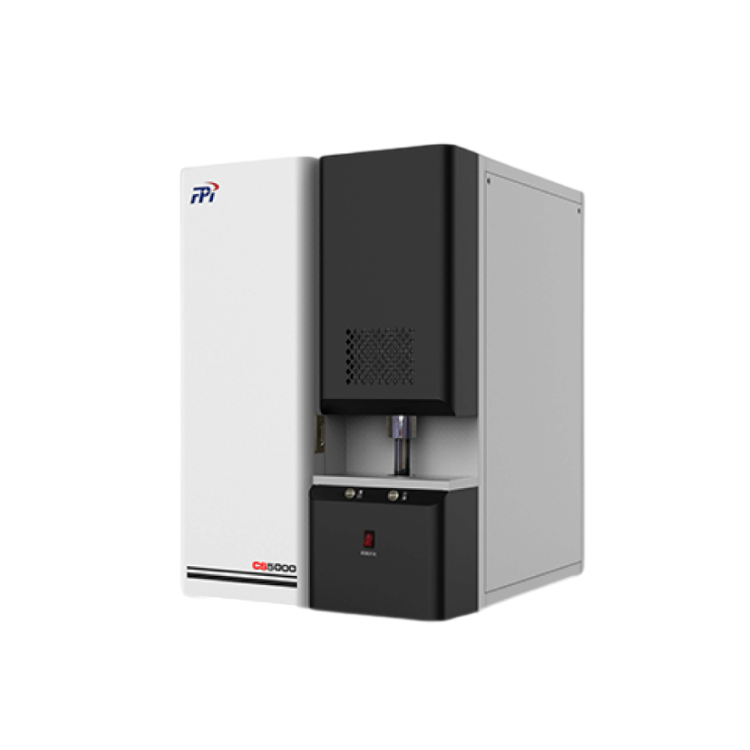
ONH5000 Oxygen, Nitrogen and Hydrogen Analyzer is a high-performance analyzer for fast and accurate analysis of oxygen, nitrogen and hydrogen elements. The whole machine adopts modular and integrated design with six independent hardware module units, which is suitable for the determination of oxygen, nitrogen and hydrogen contents in ferrous metals, nonferrous metals, superconducting materials, semiconductor materials, rare earth materials, ceramic materials, refractory materials and other metallic and nonmetallic solid materials.
ONH5000 Oxygen, Nitrogen and Hydrogen Analyzer is a high-performance analyzer for fast and accurate analysis of oxygen, nitrogen and hydrogen elements. The whole machine adopts modular and integrated design with six independent hardware module units, which is suitable for the determination of oxygen, nitrogen and hydrogen contents in ferrous metals, nonferrous metals, superconducting materials, semiconductor materials, rare earth materials, ceramic materials, refractory materials and other metallic and nonmetallic solid materials.
Principle
The ONH5000 Oxygen, Nitrogen, and Hydrogen Analyzer utilizes an inert gas-protected pulse furnace for melting and decomposition of samples. It measures oxygen via infrared absorption and nitrogen and hydrogen via thermal conductivity detection. The instrument is capable of simultaneously determining the content of oxygen, nitrogen, and hydrogen, or measuring each element individually as needed.
Equipped with an 8.0 kW pulse electrode furnace under inert gas protection, the ONH5000 achieves temperatures exceeding 3500°C. The furnace features program-controlled temperature ramping, with selectable power or current-controlled heating modes, ensuring complete and controlled sample decomposition. Depending on the target element, either helium or nitrogen is used as the carrier gas.
During high-temperature thermal decomposition:
The carrier gas transports these gases to a conversion furnace, where CO is oxidized to CO₂. The mixed gases then pass through the infrared detection system, where CO₂ is quantified. The remaining gas mixture (containing N₂ and H₂, with CO₂ removed) is routed to the thermal conductivity detector for the measurement of nitrogen and hydrogen.
Both detection systems (IR and TCD) amplify and convert the collected signals via A/D processing. These signals are then sent to the computer system for data analysis, calculating the oxygen, nitrogen, and hydrogen content in the sample with high precision.
Fully digital closed-loop control pulse electrode furnace
Programmable temperature ramping with multiple heating modes: constant power, constant current, constant voltage, and slope control
Higher precision temperature control ensures optimized melting and gas release performance
Modular design for both instrument control and data acquisition, with zero-drift architecture
Built on a 32-bit Reduced Instruction Set Computing (RISC) central processor architecture
Runs on uClinux operating system for faster, more stable performance
Independent channel acquisition prevents sequential sampling interference
Fully integrated design with optimized layout for enhanced gas-tightness
All components made with imported, high-quality parts
Cylinder with dual-axis guide ensures smooth and stable electrode movement
Automatic sample dropping mechanism with gas curtain protection
Stable flow and pressure control, plus eco-mode standby for gas saving
Integrated solid-state infrared sensor for oxygen measurement; multiple IR cell ranges optional
Long-life precious metal miniature infrared light source, with no signal degradation over time
High-precision narrow-band optical filters and IR sensors
Full-range linear calibration with automatic temperature, pressure, and flow compensation
Optional imported IR detectors and dual infrared cells for enhanced sensitivity
High-sensitivity thermal conductivity detector (TCD) with high resistivity and large temperature coefficient
High-stability thermal conductivity unit using high-strength, low-noise hot-wire elements
Drift-free signal acquisition circuitry
Linear calibration technology enables a wider and more accurate detection range
Ready to enhance your operations with industry-leading online analysis solutions? Get in touch for expert guidance, pricing, or a personalized demo.
Send Your Inquiry Today