The ironmaking process includes the blast furnace (BF) and direct reduced iron (DRI). The blast furnace is the most common ironmaking process, where iron ore is reduced to pig iron by coke and limestone in a blast furnace. The direct reduced iron process is used to produce sponge iron by reducing iron ore with natural gas or coal in a shaft furnace.In the blast furnace, the hot air blast is injected into the furnace to burn the coke, producing CO and heat to reduce the iron ore.···
The ironmaking process includes the blast furnace (BF) and direct reduced iron (DRI). The blast furnace is the most common ironmaking process, where iron ore is reduced to pig iron by coke and limestone in a blast furnace. The direct reduced iron process is used to produce sponge iron by reducing iron ore with natural gas or coal in a shaft furnace.
In the blast furnace, the hot air blast is injected into the furnace to burn the coke, producing CO and heat to reduce the iron ore. The gas generated in the furnace is called top gas, containing CO, CO2, N2, and H2. The presence of flammable and explosive gases requires continuous monitoring of oxygen (O2) for safe operation. To control efficiency of the desulfurization tower needs a reliable measurement of hydrogen sulfide (H2S) before and after it. Coke dry quenching (CDQ): The circulating gas used for cooling the red hot coke thereafter forms carbon monoxide (CO), carbon dioxide (CO2) and carries oxygen (O2), and possible hydrogen (H2). Continuous monitoring of above gases helps reduce burning loss and ensure safe operation.
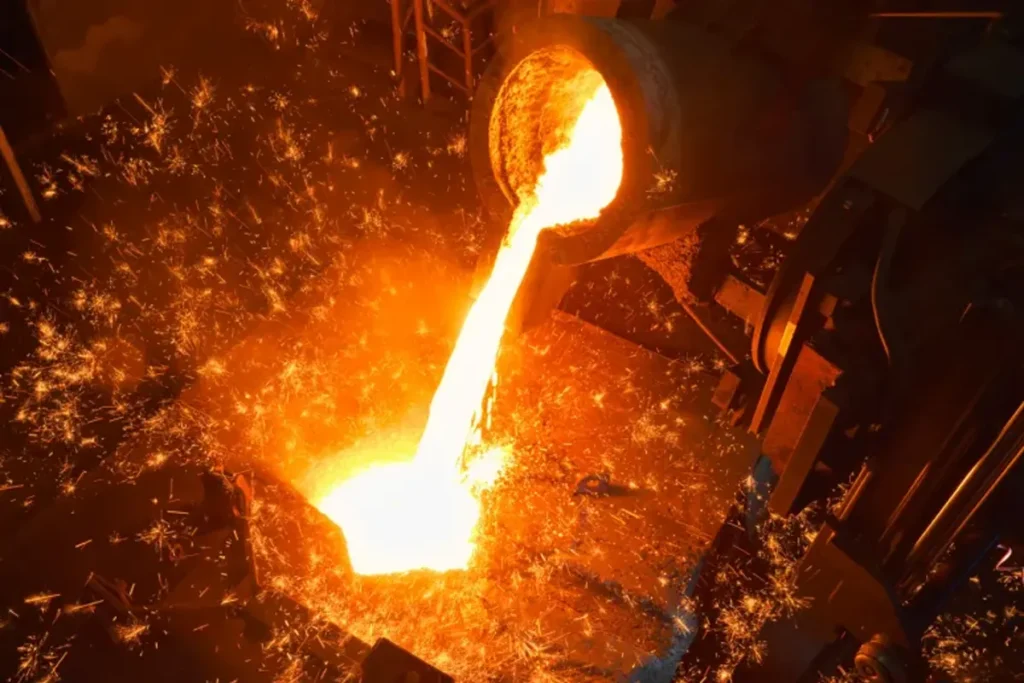
Our solutions optimize top gas analysis and desulfurization in blast furnaces for efficient reduction.
Blast furnace gas: The gas produced in blast furnace mainly contains carbon monoxide(CO), carbon dioxide(CO₂), oxygen(O₂) and hydrogen(H₂). Controlling combustion efficiency in the furnace and keeping safe operation of the bag filter needs a continuous monitoring of above gases.
Hot blast stove flue gas: Real-time monitoring of carbon monoxide(CO) in the flue gas ensures safe operation of the stove.
In BF and CDQ, LGA measures O2, H2S, and H2 with ppb sensitivity, preventing explosions and optimizing desulfurization for 98% efficiency. Purge integration reduces downtime by 20%, complying with ISO 11047 for top gas analysis in ironmaking.
Our methodical approach drives success
Evaluate BF top gas flows, desulfurization efficiency, and CDQ temperatures to detect reduction imbalances.
Adapt LGA for furnace throats or towers, with ATEX certification and DCS linkage.
Install systems in 3-5 weeks with minimal interruption, including H2S calibration and training.
Supply 24/7 remote analytics, yearly updates, and 2-year warranty for sustained 99% reliability.
FPI leads in iron making by enhancing top gas accuracy and CDQ operational safety.
Additional metrics: 20+ years in gas analytics, 95% customer satisfaction, equipped 100+ blast furnaces globally, in-situ laser for high-dust conditions.
Send Your Inquiry Today